
Driving lessons in Massachusetts are a legally required component of the teen licensing pathway, not interchangeable with general driving practice. The RMV mandates 12 hours of professional behind-the-wheel instruction and 6 hours of in-car observation, both delivered by a licensed instructor in a dual-control vehicle. Parent-supervised practice does not replace this requirement. Online platforms cannot substitute for it. In Massachusetts, the road test failure rate jumped from 28% to 42% between 2020 and 2025. The American Automobile Association attributes this trend to fewer teenagers completing driver’s education courses before attempting the road test. That context changes what “finding driving lessons” means. The quality and structure of those 12 hours shapes outcomes far beyond passing the road test. This guide covers what driving lessons cover in Massachusetts, how each stage builds on the last, and why instructor quality determines the difference between a student who passes once and one who never needs to go back. Central Massachusetts Driving School
What Massachusetts Law Requires for Driving Lessons
The RMV is specific about the behind-the-wheel component. Students must complete 18 hours of total on-road instruction. That breaks into 12 hours of active behind-the-wheel training and 6 hours of in-car observation. Both are required. Neither can be shortened or substituted.
A valid Massachusetts learner’s permit must be in hand before any professional lesson begins legally. A learner’s permit requires passing the 25-question written knowledge exam at the RMV with at least 18 correct answers. All lessons must be completed in a dual-control vehicle operated by an individually RMV-certified instructor who passes annual CORI background screening.
The 2-Year Completion Window
A student must complete the driver education program, both classroom instruction and motor vehicle on-road instruction, within 2 years from the first session in a driver education program. Starting classroom instruction, pausing for months, and resuming can push students outside this window. Planning the full sequence before the first session prevents this problem entirely. Battleshiphd
How Driving Lessons Progress: The Sequence That Builds Real Skill
The most common expectation families bring to a first lesson is that it will feel like driving practice. It doesn’t. Professional driving lessons are structured skill-building sessions. Each session targets a specific competency. Complexity increases only when the instructor confirms the preceding skill is stable under real road conditions.
Early Sessions: Vehicle Control Before Road Complexity
The first two lessons focus on vehicle familiarization. Pre-drive inspection, mirror adjustment, seat positioning, and smooth starts and stops on low-traffic residential streets. The goal is automatic physical control. When reaching for the turn signal or checking mirrors becomes automatic, the student’s cognitive attention shifts to the road itself rather than the controls.
Middle Sessions: Real Road Navigation
Sessions three through nine introduce real traffic. Lane positioning, intersection right-of-way, and signaling on arterial roads come first. Route 9 and Route 20 through Worcester County enter the curriculum during this phase. These roads carry multi-lane traffic, uncontrolled intersections, and the same conditions that appear on Central Massachusetts road test routes.
Rotary navigation receives dedicated attention here. Central Massachusetts rotaries at Worcester, Shrewsbury, and Westborough appear in local road test routes. Students who have practiced rotary entry under instructor supervision before test day don’t freeze when the examiner directs them toward one.
Final Sessions: Road Test Preparation
The final two lessons simulate the road test evaluation directly. Parallel parking, three-point turns, and a full-route run through the conditions the RMV examiner uses at Worcester and Leominster testing locations. AAA spokesperson Mark Schieldrop notes that students who lack classroom experience and practice hours are “lacking the classroom experience, learning the rules of the road, and then they’re not getting practice hours in.” Structured final sessions close exactly that gap. Central Massachusetts Driving School
The 6 Hours of In-Car Observation: Why They Matter
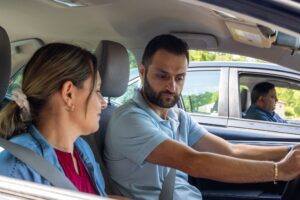
Every Massachusetts driving lesson program includes 6 hours of in-car observation. Students sit in the back seat and watch another student drive with instructor commentary. This component builds hazard recognition and pattern awareness before students face those situations as the driver.
Watching another student attempt a rotary entry incorrectly, hearing the correction, and seeing how the adjusted approach differs plants that correction before the observer faces the same situation. Students who engage actively during observation consistently progress faster during their own behind-the-wheel sessions than those who treat observation as a passive requirement.
What Separates CMSC’s Driving Lessons From Other Central Massachusetts Schools
Every driving school in Massachusetts will tell you their curriculum is the best, and their instructors know the most. The reality is that we are all following the mandates and required curriculum provided by the state. The honest differentiator comes down entirely to instructor quality, road specificity, and scheduling consistency. Massmotorcycleschool
CMSC’s instructor team includes professionals with Massachusetts law enforcement and commercial vehicle operation backgrounds. Their expertise extends beyond the minimum PDI certification. When an instructor with thousands of professional driving hours corrects a student’s following distance on Route 9 approaching Worcester, that correction reflects direct local knowledge rather than a textbook principle applied to a generic scenario.
CMSC delivers driving lessons across six Worcester County campuses: West Boylston, Auburn, Milford, Northborough, Shrewsbury, and Westborough. Pickup and drop-off service runs across Worcester County. Most Central Massachusetts students access lessons without traveling to a campus for every session.
The teen driver’s education program covers the full RMV-required curriculum: 30 hours of in-person classroom instruction, 12 hours of driving lessons, 6 hours of in-car observation, and the mandatory 2-hour parent class. All lessons use dual-control vehicles operated by CORI-checked, RMV-certified instructors. No student advances to more complex conditions until the previous skill set is stable under supervisor observation.
Road Test Preparation and Sponsorship
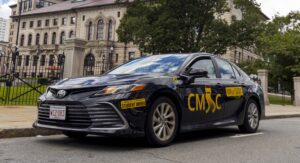
After completing all driving lesson requirements, CMSC’s road test preparation and sponsorship service handles RMV scheduling at Worcester and Leominster test locations. It provides a school vehicle for the exam and includes a warmup lesson on the day of the test. Students who use the same vehicle throughout their lessons take the road test in a vehicle whose controls, dimensions, and handling are already automatic. That familiarity removes one significant variable on the most consequential day of the licensing process.
For students who need focused parallel parking work, CMSC’s Parallel Parking Bootcamp is a standalone session with a pass guarantee.
Driving Lessons for Adults: The Same Standard, a Different Starting Point
Adult driving lessons at CMSC serve adults who are getting a first license, returning after years away, or building confidence before a road test after anxiety. Adult instruction uses the same CORI-checked instructors, dual-control vehicles, and real-road Central Massachusetts curriculum as the teen program. Pace is set by the student’s actual progress. Evening and weekend scheduling accommodates working adults across all six Worcester County campuses. Completing an RMV-approved adult driving lesson program also qualifies most Massachusetts drivers for a 10% auto insurance discount from most carriers.
Conclusion
Driving lessons in Massachusetts are a specific, legally required component of the licensing pathway for teens, and a practically essential component for most adults preparing for a road test. Massachusetts road test failure rates rose from 28% to 42% between 2020 and 2025, largely because fewer adults completing road tests had formal driver’s education. The 12 hours of professional behind-the-wheel instruction, the 6 hours of in-car observation, and the quality of the instructor delivering them determine whether those hours produce a driver who passes on the first attempt. CMSC’s driving lesson programs across six Worcester County campuses, staffed by law enforcement and commercial driving professionals, have produced over 100,000 licensed Massachusetts drivers since 1986. That track record is the standard worth comparing against. Central Massachusetts Driving School