
Starting road driving lessons for beginners in Massachusetts raises a question most driving guides never answer honestly: what does it actually feel like the first time the car moves on a real road? The rules are memorized. The permit test is done. Everything looks manageable on paper. Then the car moves for the first time on a real street. Suddenly, traffic, mirrors, signals, and steering inputs compete for space in your head all at once. This guide explains exactly what beginners experience in their first road driving lessons, what the physical and cognitive reality of those first sessions involves, and how the deliberate lesson structure turns that initial overwhelm into consistent, growing competence.

What Road Driving Lessons for Beginners Actually Are
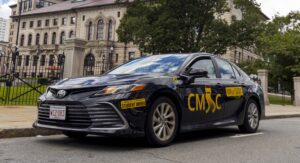
Road driving lessons for beginners are professionally structured, in-vehicle training sessions conducted on real public roads under the supervision of an RMV-certified instructor. They differ from classroom instruction, from parking lot practice, and from parent-supervised driving in one fundamental way. A professional instructor sits in the passenger seat of a dual-control vehicle throughout every session and can intervene safely at any moment.
Three things separate professional road driving lessons for beginners from parent-supervised practice. First, the dual-control vehicle gives the instructor independent brake access. Second, the instructor’s professional background means they remain calm in situations that would alarm a parent passenger. Third, a deliberate skill progression builds each session on the foundation of the previous one rather than driving wherever feels comfortable that day.
Massachusetts requires a minimum of 12 hours of professional behind-the-wheel instruction as part of the teen Junior Operator License pathway. Adult drivers over 18 do not face a legal requirement to complete professional road lessons, though completing them significantly improves road test outcomes and qualifies most drivers for a meaningful auto insurance discount.
What You Must Have Before Your First Road Driving Lesson in Massachusetts
Massachusetts sets specific requirements every beginner must meet before road driving lessons can legally begin. Missing any one of them delays the first lesson regardless of enrollment status.
A Valid Massachusetts Learner’s Permit
A valid Class D learner’s permit must be in hand before any road driving lesson can begin. Obtaining the permit requires passing the 25-question written knowledge test at the RMV with at least 18 correct answers. Students still preparing for the knowledge test can use CMSC’s Massachusetts permit test preparation guide to understand the most commonly missed topics before their RMV appointment.

The Completed Parent Class
Massachusetts requires one parent or guardian to complete a 2-hour parent class before any teen can begin road driving lessons with a professional instructor. This is an RMV requirement, not a CMSC policy. CMSC provides the parent class at no charge for all enrolled students. Both online and in-person formats are available, removing the scheduling barrier that delays some students before their first lesson.
Sufficient Classroom Foundation
Massachusetts requires 30 hours of in-person classroom instruction as part of the complete driver education program. Students who complete a meaningful portion of classroom instruction before road lessons begin arrive knowing vocabulary for what they experience on the road. They understand what a thickly settled area means before encountering an unmarked residential speed limit. They know the rotary yield rule before their first Worcester County rotary entry.
CMSC’s teen driver’s education program integrates classroom and road lesson scheduling so neither component creates a bottleneck in the other’s progress.
What Beginners Actually Feel During Road Driving Lessons for Beginners
Most beginner road lesson guides describe what you will do. Very few describe what you will actually feel. Understanding the physical and cognitive reality of the first lesson reduces the gap between expectation and experience.
The Physical Sensations That Surprise Most Beginners
The car feels heavier than expected. Steering input produces a response that feels larger and faster than the hand movement suggests. The brake pedal is more sensitive than most beginners anticipate, and initial stops feel abrupt until brake pressure calibration develops over several repetitions.
These sensations are normal and they resolve quickly. Most students feel the steering begin to normalize within 20 minutes of their first moving session. Brake calibration typically takes two to three lessons before stops feel consistently smooth. Neither adjustment requires special aptitude. Both develop through repetition in conditions where making an error produces a correction, not a consequence.
The Cognitive Load Beginners Underestimate
Managing steering, speed, mirror checks, signal timing, road position, and hazard monitoring all at once overwhelms working memory in the first lesson. This is not a sign of poor aptitude. It is the predictable result of learning a complex skill before any component tasks have become automatic. By the fourth or fifth lesson, foundational physical controls begin to operate without conscious direction, freeing working memory to process the traffic environment instead of managing the vehicle itself.
What the Instructor’s Presence Actually Changes
CMSC instructors in the passenger seat bring professional backgrounds including state troopers, police officers, and commercial drivers. Their composure in situations that would alarm a parent passenger communicates calm to the student through tone, body language, and the absence of visible stress. Students consistently identify the instructor’s composure as the single most effective anxiety-reducing element of their first road lesson.
Knowing the instructor has independent brake access changes how the student processes their own mistakes. Instead of managing both the vehicle and the fear of consequence simultaneously, the student focuses on the task. Safety is managed separately.
The Progression of Road Driving Lessons for Beginners at CMSC
Before the Car Moves: Vehicle Familiarization
Every first road lesson at CMSC begins with the vehicle parked and stationary. The instructor walks through every control the student will use during the session. Mirror adjustment, seat positioning, seatbelt confirmation, indicator location, windscreen wiper controls, hazard lights, and parking brake operation. This five-minute orientation removes an entire category of uncertainty before the car moves.
Students who know exactly where every control is before the engine starts have one fewer source of uncertainty competing for working memory when traffic appears. This directly reduces first-lesson anxiety and makes the first moving minutes more productive.
First Movement: Quiet Residential Streets
First movement in road driving lessons for beginners takes place on quiet residential streets in low-traffic areas near the pickup location or CMSC campus. Route 9 does not appear in lesson one. Worcester intersections at rush hour do not appear in lesson one. Road conditions are selected specifically because they give beginners space and time to experience the relationship between steering input, speed, and vehicle response without managing complex traffic simultaneously.
This progression matches the cognitive load of the environment to the student’s current automatic response capability. Complexity is a teaching variable. CMSC instructors manage it as deliberately as every other element of the session.
Lessons 1 to 3: Building Foundational Control
Early road driving lessons for beginners focus on building automatic physical responses that make everything else possible. Smooth acceleration from a stopped position. Controlled braking that brings the vehicle to complete rest without jerk. Steering adjustments that maintain lane position on a residential street. Mirror checks at regular intervals as a habitual sequence rather than an occasional reminder.
These skills feel deliberate and effortful in lesson one. By lesson three, most students execute them with enough automaticity that the instructor can introduce the first external complexity. That complexity is simply what to do when another vehicle is present. Managing the car in a shared environment marks the most significant developmental shift in beginner road lesson progression. Lessons one through three build the foundation that makes it possible.
Lessons 4 to 6: Real Traffic and Intersections
With foundational vehicle control becoming more automatic, lessons four through six introduce real intersections. Complete stops before proceeding, confirmed by the settling feel of zero wheel rotation. Signal activation before every turn. Mirror and blind spot checks before every directional change. These become practiced habits rather than memorized steps.
Light residential traffic appears in these lessons, requiring the student to process another moving vehicle, assess speed and trajectory, and make a timing decision. Managing the vehicle while simultaneously processing an external situation is where the automatic physical responses from lessons one through three become essential.
Lessons 7 to 9: Worcester County Road Types
Worcester County has one of the highest rotary densities in Massachusetts. Most road test routes at Worcester and Leominster RMV locations include at least one rotary. Lessons seven through nine introduce the road types that make Central Massachusetts genuinely challenging for new drivers.
Rotary navigation requires the yield-to-circulating rule, gap acceptance judgment, entry speed management, and both entry and exit signals to function simultaneously. Each element appears separately in earlier lessons. At the rotary, all of them must function together. CMSC instructors teach rotary navigation at the specific rotaries that appear on Worcester County road test routes, so students practice at the exact locations they will be evaluated on.
Arterial road driving on higher-speed routes also begins in this phase. Speed management at 35 to 45 mph, larger following distance calibration, and highway approach ramps are introduced as the student’s demonstrated readiness confirms they are prepared for each addition.
Lessons 10 to 12: Road Test Simulation
Final lessons shift from skill introduction to skill consolidation, running the student through the specific maneuvers evaluated on the Massachusetts Class D road test. Parallel parking with cone markers. Three-point turns. Full observation sequences before every directional change. Signal compliance at every required moment.
Students who complete all 12 behind-the-wheel lessons with CMSC arrive at their road test having already experienced evaluation-condition driving. CMSC’s road test preparation and sponsorship service includes a warmup lesson on the morning of the exam. Exam day becomes the second evaluation experience of the morning, not the first.
Common Mistakes Absolute Beginners Make in Road Driving Lessons
Understanding what beginners consistently get wrong in early road driving lessons helps students avoid the patterns before they develop into habits.
- Gripping the steering wheel too tightly. Tense arms reduce steering sensitivity and tire more quickly than relaxed arms. Instructors address this in lesson one, but the habit requires consistent awareness to correct.
- Watching the road immediately ahead instead of scanning further forward. Beginner drivers focus close. Experienced drivers scan further. Instructors introduce forward scanning progressively as vehicle control improves.
- Braking too early or too late. Brake distance calibration develops over multiple lessons and does not feel accurate until the student has practiced at a variety of approach speeds.
- Forgetting to signal before turning. Signal activation requires a separate conscious step in early lessons. It becomes automatic only with deliberate practice at every single maneuver in every session.
- Slowing unnecessarily when checking mirrors. New drivers often reduce speed during mirror checks because the attention split feels uncomfortable. Instructors identify and correct this early because it creates rear-end collision risk in real traffic.
What Makes Massachusetts Road Driving Lessons Unique for Beginners
Beginner road driving lessons for beginners in Massachusetts are not interchangeable with beginner road lessons anywhere else. Central Massachusetts presents specific challenges no generic driving guide addresses.
Thickly settled areas carry no posted speed limit sign. Massachusetts sets a default 30 mph limit in thickly settled areas regardless of posted signage. A beginner driving at 40 mph through an unmarked residential neighborhood violates the law with no visual indication. CMSC classroom instruction covers this before road lessons begin. Road lessons reinforce it the first time students encounter an unposted residential street.
Rotaries appear early and often. Worcester County beginners encounter rotaries within the first weeks of independent driving. CMSC road lessons include rotary navigation practice at the specific rotaries that appear in daily driving environments and road test routes throughout Central Massachusetts.
Seasonal surface changes require specific preparation. Massachusetts winters produce black ice, freezing rain, and sudden road surface transitions that challenge experienced drivers. Beginners who complete licensing in spring and begin independent driving in November have no direct experience with these conditions. CMSC’s SKIDZ Driver Skills Development Program builds emergency vehicle control skills on a dedicated closed skid track that public road lessons cannot safely replicate.

How to Prepare for Your First Road Driving Lesson as a Complete Beginner
Physical and logistical preparation matters more than additional studying at this stage. Removing sources of uncertainty before the car moves is what actually helps most in early road driving lessons.
- Bring your valid learner’s permit to every lesson. Instructors cannot begin without a valid permit confirmed in hand.
- Wear comfortable closed-toe shoes. Footwear with full pedal sensitivity makes accelerator and brake feedback clearer. Flip-flops and heels create pedal control problems from lesson one.
- Arrive five minutes early. Minutes spent on logistics rather than instruction reduce productive lesson time directly.
- Tell your instructor about specific concerns before moving. Anxiety about rotaries, highway merging, or any specific road type allows the instructor to introduce those elements at the optimal point in the sequence.
- Do not compare your pace to other beginners. Some students advance through the skill sequence faster than others. Road test readiness that reflects genuine competence is the goal, not the fastest possible hour count.
Road Driving Lessons for Beginners: Adults vs Teens in Massachusetts
Adult road driving lessons for beginners look different from teen lessons in the Junior Operator License pathway. Adults over 18 do not face a legal requirement to complete professional road lessons in Massachusetts. Adults who complete a structured road lesson program through an RMV-approved school arrive at the road test significantly better prepared than those who rely only on self-directed practice.
CMSC’s adult driving lessons serve first-time adult drivers with zero prior experience, returning drivers rebuilding skills after years away, and adults with driving anxiety who need a patient, structured approach. Adult road lessons follow the same skill-building sequence as the teen program, adjusted to the individual’s specific starting point and schedule.
How CMSC’s Road Driving Lessons Connect to the Complete Licensing Program
Professional road driving lessons work most effectively when they connect to the other components of the complete program deliberately.
- Thirty classroom hours build the knowledge foundation that road lessons apply in real traffic
- The parent class prepares one parent or guardian to supervise the 40 required practice hours without adding anxiety or undoing what professional instruction built
- Twelve professional road lessons build the skills the parent-supervised hours then reinforce and extend
- Completing the SKIDZ Driver Skills Development Program reduces the parent-supervised hour requirement from 40 to 30 and builds emergency vehicle control skills
- CMSC’s Parallel Parking Bootcamp addresses the most commonly failed road test maneuver with a dedicated session and a pass guarantee
Why Choose CMSC for Road Driving Lessons for Beginners in Massachusetts
CMSC has delivered road driving lessons for beginners in Massachusetts since 1986. More than 100,000 drivers have completed CMSC programs across Worcester County. Here is what specifically separates CMSC’s beginner road lesson program from every other option in Central Massachusetts.
- 50-plus RMV-certified instructors. Lesson scheduling never depends on one or two instructor availability windows. Students maintain consistent weekly lesson frequency without multi-week gaps.
- 100-plus pickup locations across Worcester County. Most public high schools and many residential addresses throughout Central Massachusetts are covered. Transportation does not determine lesson frequency.
- Worcester County road knowledge. CMSC instructors teach on the specific roads, rotaries, and intersections that appear on Worcester and Leominster road test routes. Beginners practice at the same locations they are evaluated at.
- Dual-control training vehicles for every session. Every road driving lesson for beginners takes place in a vehicle where the instructor has independent brake access. Beginners drive. Instructors manage safety. Neither function compromises the other.
- No assumed pace. Some beginners reach road test readiness after 12 professional hours. Others need additional instruction on specific skills before the road test appointment is appropriate.
- Multilingual instruction. Road lessons for beginners are available in Arabic, Albanian, Cantonese, French, Haitian Creole, Spanish, and Urdu.
Here is what actual CMSC students say about their experience:
“CMSC was extremely helpful in teaching my children beyond the basic driving skills. The instructors were knowledgeable, patient and professional and worked to boost confidence.” – Lesley W., verified CMSC student parent
“I started lessons in my mid-thirties with really not a ton of driving experience. My instructor Jennifer was very kind and thorough and made it a comfortable environment to grow and learn in. With her help and guidance I was able to successfully get my license.” – Verified CMSC Adult Student
“My child could be anxious at times and Jess was very good at giving her confidence and helping her out. Jess would explain things in a different way if needed.” – Verified CMSC Student Parent
Rated 4.9 stars across more than 3,379 verified reviews.
Conclusion
Road driving lessons for beginners in Massachusetts are not a single experience. They are a twelve-session progression from parked vehicle orientation to road test readiness, each session introducing complexity matched to the student’s demonstrated skill level at that moment. The physical sensations of the first road lesson, the steering weight, the brake sensitivity, the cognitive load of simultaneous inputs, all normalize within the first three to four sessions when the instruction pace matches the student’s actual starting point. Massachusetts beginners face road conditions no generic driving guide addresses: Worcester County rotaries, unmarked thickly settled speed limits, and the seasonal surface changes of New England winter. CMSC’s road driving lessons for beginners address those specific conditions, taught by instructors who know those specific roads, in dual-control vehicles that make every session genuinely safe. To enroll, explore the teen driver’s education program or adult driving lessons and take the first step toward your Massachusetts license today.
About the Author
Jake Cooney is the CEO of CMSC Driving School, an RMV-licensed professional driving school serving Central Massachusetts since 1986. Under his leadership, CMSC has trained over 100,000 drivers across Worcester County, maintained a 4.9-star rating across more than 3,379 verified reviews, and built the only Driver Skills Development Program on a dedicated closed skid track in Central Massachusetts. Jake oversees a team of 50-plus RMV-certified instructors including former state troopers, police officers, and professional drivers.