


Applying for a temporary license in Massachusetts – officially called a Class D learner’s permit – is the crucial first step on that journey. This guide walks you through every step: the documents you need, the knowledge test you must pass, the restrictions that apply after you receive your permit, and exactly what to do next to move toward your full Massachusetts driver’s license.
Quick Answer: Massachusetts Learner’s Permit at a Glance
- Official name: Class D Learner’s Permit (not “temporary license”)
- Minimum age: 16 years old to apply; 15 years and 9 months to begin classroom instruction
- Permit validity: 2 years from issue date
- Documents needed: Proof of identity, two proofs of MA residency, Social Security number, parental consent if under 18
- Fee: $30 (confirm current fee at Mass.gov/RMV before visiting)
- Knowledge test: 25 questions, must score 18 or higher (72%) to pass
- After permit: Teens must enroll in RMV-approved drivers ed, log 40 hours of supervised practice, and hold the permit 6 months before the road test
What Is a “Temporary License” in Massachusetts?
In Massachusetts, the term temporary license is often used informally, but the official name is the learner’s permit. Think of it as your driving training wheels. With a learner’s permit, you can practice driving on public roads only when accompanied by a licensed adult (age 21 or older) in the passenger seat. This permit lets you gain experience and confidence while following the rules. It’s valid for two years and is your ticket to getting a full driver’s license once you’re ready.
Who Needs a Learner’s Permit?
A learner’s permit in Massachusetts is for:
- New Drivers (Teens & Adults): If you’re at least 16 years old and ready to learn how to drive, you must first get a learner’s permit before earning a full driver’s license.
- New Massachusetts Residents: If you recently moved to Massachusetts and do not have an out-of-state license, you’ll need to start with a permit.
- Lost or Stolen License: If your Massachusetts license was lost or stolen, the RMV may issue you a temporary permit while a replacement is processed.
In all cases, the goal is the same: practice driving safely under supervision until you can take your road test.
Age and Consent Requirements
- Minimum Age: You must be at least 16 years old to apply for a Class D learner’s permit in Massachusetts. Teens can begin the 30-hour classroom portion of an approved driver’s education program at 15 years and 9 months.
- Parental/Guardian Consent: If you’re under 18, a parent or legal guardian must sign your application giving consent. This usually happens at the RMV office when you apply.
Required Documents for Your Application
Before visiting the Registry of Motor Vehicles (RMV), gather all necessary documents. This prevents delays and saves time. You’ll need:
- Proof of Identity: An original birth certificate (U.S. or certified), valid U.S. passport, or another government photo ID.
- Proof of Massachusetts Residency: Two documents showing your Massachusetts address, such as a utility bill, lease agreement, bank statement, or school transcript. Make sure they’re recent (usually within the last 60 days).
- Social Security Number: Your Social Security card or a W-2 or pay stub with your full SSN. If you’re not eligible for a Social Security Number, bring a letter of ineligibility from the Social Security Administration.
- Parental Consent Form: For drivers under 18, the RMV provides a consent form that a parent/guardian must sign at the RMV office.
- Completed Application: The “Driver’s License, Learner’s Permit or ID Card Application” form (available online at Mass.gov/RMV or at the RMV office). You can fill this out online to save time, but you still need to bring it with you if you started it online.
Vision Screening: During your RMV visit, you must pass a vision test to ensure you meet the state’s eyesight standards. No special documents for this — just show up and read the chart.
Steps to Apply for Your Learner’s Permit
Once you have everything ready, follow these steps to get your temporary license (learner’s permit):
- Complete the Application: Fill out the learner’s permit application form online or print it out and fill it by hand. Provide all required information accurately.
- Schedule or Walk into the RMV: It’s wise to make an appointment at the Massachusetts RMV online (Mass.gov/RMV) to avoid long lines. If you can’t schedule, arrive early at a full-service RMV branch.
- Bring Your Documents: Take your completed application and all original documents (IDs, proofs of address, SSN, consent form) to the RMV. Photocopies or digital copies are NOT accepted; originals only.
- Vision Test: At the RMV office, complete the mandatory vision screening. If you wear glasses or contacts, be sure to bring them.
- Knowledge Test: After passing the vision check, you’ll take the written permit test on Massachusetts driving rules and road signs. The test consists of 25 multiple-choice questions and is typically computer-based at the RMV. You must answer at least 18 correctly (72%) to pass. If you don’t pass the first time, you can retake it after a short wait.
- Pay the Fee: The learner’s permit fee is approximately $30 (verify the current amount at Mass.gov/RMV before your visit). You can pay by cash, check, or credit card at the RMV.
- Receive Your Learner’s Permit: Once you pass the test and pay, you’ll be issued your permit. The official plastic permit card may arrive by mail. This permit is valid for up to 2 years.
Learner’s Permit Driving Restrictions
While your learner’s permit is a fantastic milestone, there are strict rules to follow:
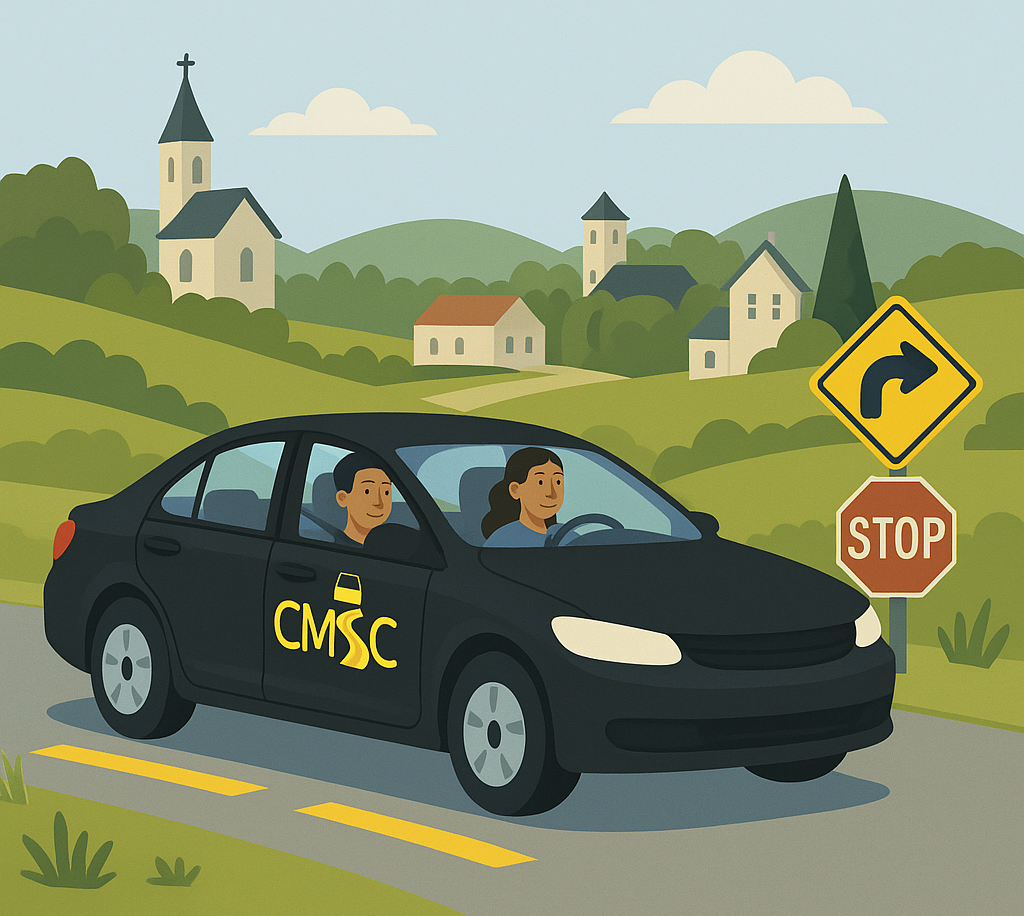
- Licensed Adult Required: You cannot drive alone. A licensed driver age 21 or older must occupy the front passenger seat at all times when you are driving.
- Cell Phones: Massachusetts law prohibits all electronic device use for permit holders while driving, including hands-free. The only exception is a 911 call when safely stopped. For a complete breakdown of the Massachusetts hands-free law and what it means for permit holders, see CMSC’s guide on the Massachusetts distracted driving law.
- No Speed Violations: Drive carefully. Any serious traffic offense could endanger your privilege to get a license.
Tip: Think of your learner’s permit as training wheels for driving. You’re allowed to make mistakes and learn, but always under close supervision. The rules might feel strict, but they’re there to keep you safe and focused on learning.
Preparing for the Knowledge (Permit) Test
Passing the written test is the key to getting your permit. Here’s how to maximize your chances:
- Study the Massachusetts Driver’s Manual: This is the official guide to everything you need. It covers road signs, right-of-way rules, speed limits, and more. You can download it for free at Mass.gov RMV Forms. Read it carefully — it’s full of important details.
- Take Practice Tests: There are online practice exams that mimic the real test format. They help you get comfortable with question styles and identify weak areas. For structured practice specifically designed for the Massachusetts permit test, see CMSC’s guide on How to Study for the Drivers Permit Practice Test in Massachusetts.
- Focus on Common Topics: Pay special attention to road signs, signaling, speed rules, and safety guidelines (like seat belt laws). A good grasp of these topics will help you breeze through the test.
- Know the Test Format: The test is 25 questions. You need 18 correct to pass. If you fail, you can retake it after a short waiting period at the RMV.
- Get a Good Night’s Sleep: Being well-rested will help you concentrate. Don’t cram last minute; start reviewing a few days ahead.
Example Questions
To give you a sense, here are example concepts you might be tested on:
- Traffic Signs: What does a flashing red traffic light mean?
- Right-of-Way: Who has the right-of-way when you and another car arrive at a four-way stop at the same time?
- Speed Limits: What is the default speed limit in a Massachusetts residential area if not posted?
Knowing these reduces anxiety and improves accuracy. For additional practice, CMSC has compiled a full guide on what the RMV actually tests at Practice Driving Exam Online in Massachusetts.
From Permit to Full License
Congratulations on getting your learner’s permit! The next step is working toward your full Massachusetts driver’s license.
- Practice, Practice, Practice: Use your permit to drive as often as possible, always with a qualified adult. Log practice hours if under 18 (40 hours total, with at least 6 hours at night).
- Driver’s Education (Under 18): If you’re under 18, you must complete an RMV-approved driver’s education program — both 30 hours of classroom instruction and 12 hours of professional behind-the-wheel training — to qualify for a Junior Operator License (JOL). CMSC’s teen driver’s education program covers all required components. A mandatory 2-hour parent class must also be completed before behind-the-wheel lessons can begin.
- Wait Period: If you’re under 18, hold the permit for at least 6 months before taking the road test. If you’re 18 or older, there’s no minimum time, but you should only schedule your road test when you feel ready.
- Schedule the Road Test: When you’ve logged enough practice and are confident, book your road test through Mass.gov/RMV. You’ll need to pay a road test fee. Bring a registered, insured vehicle for the test. CMSC’s Road Test Warmup program offers a structured practice session on the actual test route the morning of your exam.
- Pass the Road Test: During this on-the-road driving test, you’ll demonstrate safe driving skills: turning, stopping, parking, and more. You can retake the test if you don’t pass the first time.
- Get Your License: After passing the road test, you’ll pay the license fee and receive your Massachusetts license. Teen drivers receive a Junior Operator License (JOL) with specific restrictions for the first year, while drivers 18 and older receive a full, unrestricted Class D license. For a full breakdown of the JOL timeline and when all restrictions lift, see When Can You Get Your License in Massachusetts.
For new drivers looking for practical guidance from the first day behind the wheel, see CMSC’s 7 Professional Tips for New Drivers by CMSC Driving School.
Remember: Even after your first license, driving safely is always important. Follow all rules and keep learning!
What Happens After You Get Your Massachusetts Learner’s Permit
Getting the permit is step one. The steps that follow determine how quickly and smoothly you move toward a full license. Here is how CMSC structures the path from permit to road test.
Step 1: Enroll in the CMSC Driver’s Education Program
Teens under 18 must complete an RMV-approved 30-hour classroom program before taking behind-the-wheel lessons. CMSC offers in-person classroom instruction at multiple Central Massachusetts locations. The full program also includes 12 hours of professional behind-the-wheel instruction and 6 hours of in-car observation. For a complete overview of what the program includes, see CMSC’s Drivers ED: A Complete Guide for First-Time Teen Drivers.
Step 2: Parent Class Before Lessons Begin
Massachusetts RMV requires one parent or guardian to complete a mandatory 2-hour parent class before their teen begins behind-the-wheel lessons. CMSC’s parent class is free for all enrolled students and covers how to structure the 40 hours of supervised practice effectively. Learn more about the parent class at CMSC.
Step 3: Log the 40 Required Practice Hours
In addition to professional lessons, Massachusetts requires teens to log 40 hours of supervised driving with a parent or guardian. Six of those hours must occur at night. The parent certifies the hours on road test day. CMSC’s lesson curriculum is designed to coordinate with home practice so that parent-supervised sessions reinforce what professional instructors have already introduced.
Step 4: Road Test and License
After holding the permit for at least 6 months and completing all program requirements, you schedule and pass the Massachusetts road test to receive your Junior Operator License or full Class D license.
Transferring an Out-of-State License
If you already have a valid driver’s license from another U.S. state and you’re now living in Massachusetts, you typically won’t need a learner’s permit. Instead, you transfer your license. However, if you haven’t driven before or your out-of-state license isn’t current, you’ll follow the steps above for the learner’s permit.
Transfer Steps (If You Have an Out-of-State License)
- Start Online: Go to Mass.gov/RMV and begin the “Transfer Your Out-of-State License” process. Fill out any preliminary forms to save time.
- Gather Documents: You’ll need your current valid license, proof of identity/residency/SSN (same as above), and two proofs of Massachusetts residency.
- REAL ID vs. Standard License: Decide whether you want a REAL ID (with a star, required for federal ID purposes like boarding a plane) or a standard license card. You make this choice when transferring.
- Visit the RMV: Schedule an RMV appointment. Bring your out-of-state license, documents, and fees. The RMV will verify your info, take a new photo, and have you surrender your old license.
- Written/Road Test (if needed): If your out-of-state license has been expired for more than a year, you might be asked to retake the written or even road test. Plan accordingly.
- Receive Massachusetts License: Once approved, you walk away with your new MA license (valid for 5 years, or 8 years with a Real ID).
Note: Driving on an expired or unconverted out-of-state license can lead to fines or insurance issues. It’s best to transfer as soon as you become a MA resident.
Helpful Tips and Resources
- Make an Appointment: RMV offices are busy. Book your visit online for a specific time to avoid long waiting lines.
- Original Documents Only: The RMV won’t accept photocopies or digital images. Double-check you have the originals.
- Check the Latest Info: Laws and fees can change. Use the official Massachusetts RMV website (Mass.gov/RMV) for up-to-date forms, fees, and details.
- Study the Driver’s Manual: It’s your best friend. Even seasoned drivers should give it a quick review before the test.
- Stay Calm and Confident: Everyone was a first-time driver once. Take deep breaths, read questions carefully on tests, and remember you can always try again if you don’t pass at first.
Here’s a quick checklist of what to bring to the RMV when applying for a learner’s permit:
- Completed application form
- Proof of identity (e.g., birth certificate, passport)
- Proof of MA residency (two documents)
- Social Security proof
- Parental consent (if under 18)
- Payment for fees (cash, check, or card)
With these in hand, you’ll have everything you need.
Conclusion
Applying for a temporary license (learner’s permit) in Massachusetts doesn’t have to be confusing. By gathering the right documents, studying the driver’s manual, and following the steps above, you’ll be on the road to getting your full driver’s license before you know it. Remember, every great driver started with that first permit in hand. Stay patient, study hard, and practice safe driving.
Once you have your permit, the next step is enrolling in an RMV-approved driver’s education program. CMSC’s teen driver’s education program handles the classroom instruction, professional behind-the-wheel lessons, and in-car observation that Massachusetts requires before the road test.
Are you ready to take the wheel and apply for your Massachusetts learner’s permit today?
What CMSC Students Say
“I was very nervous to start driving but he explained everything so well with kindness and patience. He taught me everything I needed to become a safe and responsible driver and I even ended up passing my road test on the first try!” – Demetria Bosnakis, verified CMSC student
“From the very first lesson, she made me feel safe, comfortable, and confident behind the wheel. She explains things clearly, stays calm, and creates an environment where you actually want to learn instead of feeling stressed or intimidated.” – Miranda A. Murray, verified CMSC student
Rated 4.9 stars across more than 3,379 verified Google reviews. CMSC has trained over 100,000 Massachusetts drivers since 1986.
About the Author
Jake Cooney is the CEO of CMSC Driving School, an RMV-licensed professional driving school serving Central Massachusetts since 1986. Under his leadership, CMSC has guided over 100,000 Massachusetts drivers through the complete licensing journey from learner’s permit application through road test. Jake oversees a team of 50-plus RMV-certified instructors and the structured driver’s education curriculum that prepares Massachusetts teens for every step of the licensing process.
