

A Commercial Driver’s License in Massachusetts is required to operate large vehicles, transport hazardous materials, or carry more than 16 passengers. This guide covers what a CDL is, the different classes of CDL licenses, the specific requirements for obtaining one in Massachusetts, and how the Entry-Level Driver Training requirement affects your path to a commercial license.
What is a Commercial Driver’s License (CDL)?
A CDL is a specialized type of license necessary for individuals who plan to operate large vehicles such as trucks, buses, and other vehicles that have a gross vehicle weight rating (GVWR) of 26,001 pounds or more in the United States. A CDL is not just a regular driver’s license. It demands a higher level of knowledge, skills, and physical fitness to operate these large and potentially hazardous vehicles safely.
Obtaining a CDL requires meeting certain eligibility requirements, passing written and practical tests, and maintaining ongoing compliance with medical and CDL regulations. To obtain a CDL in Massachusetts, you must first determine which class of license you need based on the type of vehicle you plan to operate.
Different Types of CDL Classes in Massachusetts
Class A CDL
Per Department of Transportation regulations, any driver who intends to operate a vehicle with a total weight of 26,001 pounds or more is required to obtain a Class A license. This type of license enables the driver to operate a variety of large commercial vehicles such as tractor-trailers, tanker trucks, and other heavy-duty vehicles. The Class A license also allows the driver to tow a trailer weighing over 10,000 pounds, in addition to the weight of the vehicle being driven.
Class B CDL
A Class B license is required for operating vehicles with a gross vehicle weight rating (GVWR) of 26,001 pounds or less but with a trailer weighing over 10,000 pounds. This license allows the driver to operate single vehicles or combinations of vehicles, such as a tractor-trailer or a bus, that fall under this weight limit. The driver must pass a knowledge test and a road skills test to obtain a Class B license.
Class C CDL
A Class C driver’s license is required for operating vehicles that do not fall under the Class A or Class B categories. These vehicles are designed to carry hazardous materials or more than 16 passengers, such as a small bus or a van used for commercial purposes. To obtain a Class C license, one must pass a written knowledge test and a driving skills test and meet other state-specific requirements such as age and vision standards.
CDL Endorsements in Massachusetts
An endorsement on a CDL is an additional qualification that enables the driver to operate particular types of commercial vehicles or transport certain types of cargo. Each endorsement requires a separate knowledge test and, in some cases, a skills test.
The main CDL endorsements available in Massachusetts are:
- H (Hazardous Materials): Required to transport hazardous materials. Requires a separate written test and TSA background check. Drivers must be at least 21 years old.
- P (Passenger): Required to operate vehicles designed to carry 16 or more passengers including the driver. Requires a written test and a pre-trip inspection and driving skills test.
- N (Tank Vehicle): Required to haul liquid or gaseous materials in tanks permanently attached to the vehicle or on a trailer. Requires a written knowledge test.
- T (Double/Triple Trailers): Required to pull double or triple trailers. Requires a written knowledge test.
- S (School Bus): Required to operate a school bus. Requires knowledge test, skills test, and Massachusetts-specific background check.
- X (Hazmat and Tanker Combined): Combined endorsement for drivers who carry hazardous materials in tank vehicles.
What is a Commercial Learner’s Permit (CLP)?
A commercial learner permit (CLP) is the first step towards getting your CDL. It is a permit to practice driving a commercial motor vehicle (CMV) under the supervision of a licensed CDL holder before getting a full CDL. You must hold your CLP for a minimum of 14 days before you can take the CDL skills test in Massachusetts. The CLP is valid for 180 days and can be renewed once.
Entry-Level Driver Training (ELDT): The Federal Requirement You Must Know
Effective February 7, 2022, the Federal Motor Carrier Safety Administration (FMCSA) requires all first-time CDL applicants to complete Entry-Level Driver Training (ELDT) before taking the CDL skills test. This federal mandate applies to anyone applying for a Class A or Class B CDL for the first time, upgrading from a Class B to a Class A CDL, or obtaining a school bus, passenger, or hazmat endorsement for the first time.
ELDT must be completed through a Training Provider registered on the FMCSA’s Training Provider Registry (TPR). The training consists of theory (classroom or online) and behind-the-wheel instruction covering both range and public road driving. Completion is electronically transmitted to the FMCSA and the Massachusetts RMV before the skills test can be scheduled.
Drivers who already held a CDL before February 7, 2022, are exempt from ELDT requirements for their existing license class.
How to Get a CDL in Massachusetts: Step by Step
In Massachusetts, to get a Commercial Driver’s License, you need to meet the following requirements and complete these steps in order.
Step 1: Confirm Eligibility
- You must be at least 18 years old to operate a commercial vehicle within Massachusetts
- You must be at least 21 years old to transport hazardous materials, carry passengers, or drive across state lines
- You must have a clean driving record without any suspensions, revocations, or cancellations
- You are not allowed to hold more than one driver’s license
- You cannot be subject to any CDL disqualifications
- You must be able to speak and read the English language to communicate effectively while driving a commercial vehicle
Step 2: Pass the CDL Written Knowledge Tests
Before receiving your Commercial Learner’s Permit, you must pass one or more written knowledge tests at the Massachusetts RMV depending on the CDL class and endorsements you are seeking. The required tests include:
- General Knowledge (required for all CDL classes)
- Combination Vehicles (required for Class A)
- Air Brakes (required if your vehicle is equipped with air brakes)
- Hazardous Materials (required for H endorsement)
- Passenger Transport (required for P endorsement)
- Tank Vehicle (required for N endorsement)
- School Bus (required for S endorsement)
Step 3: Complete the DOT Medical Examination
You must meet the Federal Motor Carrier Safety Regulations (FMCSR) medical standards to ensure that you are physically capable of driving safely. A DOT physical examination must be performed by a licensed medical examiner listed on the FMCSA National Registry. The medical certificate is valid for up to 24 months, though some drivers with certain medical conditions receive shorter certification periods.
Common medical conditions that affect CDL eligibility include uncontrolled diabetes, vision below the federal standard, hearing loss beyond permitted limits, and certain cardiovascular conditions. Drivers with insulin-treated diabetes are required to follow additional federal exemption procedures.
Step 4: Complete ELDT Training
Complete the required Entry-Level Driver Training with an FMCSA-registered training provider. Both theory and behind-the-wheel training must be completed and transmitted to the FMCSA registry before your skills test is scheduled.
Step 5: Apply for Your Commercial Learner’s Permit
Visit a Massachusetts RMV service center with proof of identity, Massachusetts residency, Social Security number, and your DOT medical certificate. Pay the CLP fee. Hold the CLP for a minimum of 14 days before scheduling your skills test.
Step 6: Pass the CDL Skills Test
The CDL skills test has three parts: pre-trip vehicle inspection, basic vehicle control on a closed course, and on-road driving. Each section must be passed to receive the CDL. Skills tests must be scheduled through the Massachusetts RMV or a third-party tester authorized by the RMV.
Step 7: Submit Documentation
You must provide proof of citizenship in Massachusetts and proof of permission to work in the United States, such as a Social Security Card, Birth Certificate, or Green Card.
CDL Drug and Alcohol Testing Requirements
All CDL holders in Massachusetts are subject to federal drug and alcohol testing regulations under FMCSA rules. These requirements apply before employment (pre-employment testing), at random intervals, following accidents, upon reasonable suspicion, and as part of return-to-duty protocols.
The FMCSA Drug and Alcohol Clearinghouse is a federal database that tracks CDL holders’ drug and alcohol violations. Employers must query the Clearinghouse before hiring a CDL driver and annually during employment. CDL drivers with violations may not operate commercial vehicles until they complete a substance abuse program and are cleared by a substance abuse professional (SAP).
How Long Does it Take to Get a CDL in Massachusetts?
If you want to become a professional truck driver in Massachusetts, you need to attend CDL training classes. The duration of the classes can go from as little as 3 weeks to six months. On average, it takes about seven weeks depending on how much time you can dedicate to it.
At CMSC, our Class A CDL training program is typically completed in 8 to 10 weeks, while the Class B CDL training program usually takes 5 to 7 weeks. The specific timeline depends on the endorsements you are adding and your prior driving experience. Flexible scheduling options are available to accommodate working adults.
What Jobs Can You Get With a CDL in Massachusetts?
A CDL opens access to a broad range of commercial driving careers across Massachusetts and nationally. Common careers available to Massachusetts CDL holders include:
- Long-haul truck driver (Class A): Transporting freight across state lines for logistics and retail companies
- Local delivery driver (Class B): Operating large delivery vehicles within Massachusetts for distributors and retailers
- Bus driver (Class B or Class C with P endorsement): Operating public transit, charter, or school buses
- Tanker driver (with N endorsement): Transporting liquid cargo including fuel and chemicals
- Hazmat driver (with H endorsement): Transporting regulated hazardous materials
- Emergency vehicle operator: Fire, EMS, and other emergency fleet positions that require commercial licensing
The Massachusetts commercial driving industry consistently reports driver shortages, making CDL qualification one of the most reliable paths to employment available in the state. CMSC’s fleet training program provides guidance on job search resources and employer connections following program completion. Contact the CMSC fleet and commercial driver training program for current job placement support information.
CMSC’s CDL Training Program in Massachusetts
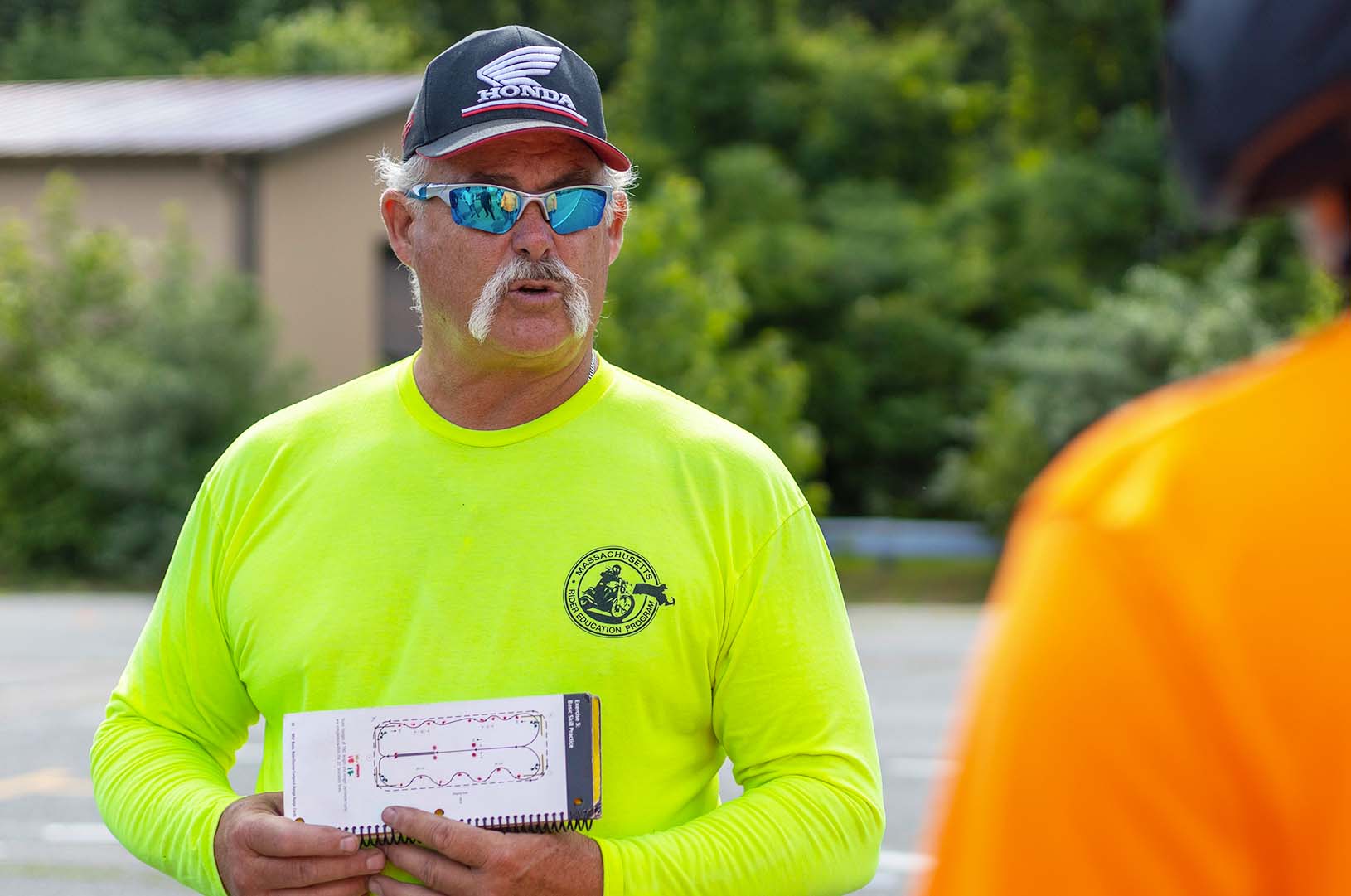
At CMSC, we offer comprehensive CDL training programs designed to equip you with everything you need to confidently achieve your commercial driving goals. Our experienced instructors, modern training facilities, and flexible scheduling options cater to a variety of learning styles and schedules. We guide you through every step of the journey, from choosing the right CDL class to preparing for tests and starting your commercial driving career.
CMSC’s CDL programs include FMCSA-compliant Entry-Level Driver Training (ELDT) with electronic transmission to the TPR registry, DOT pre-employment drug testing coordination, behind-the-wheel instruction in both Class A and Class B vehicles, and preparation for all required knowledge tests and endorsement exams.
To explore CMSC’s CDL training options or to register for a program, visit our CDL driver training program page for current availability and scheduling information.
About the Author
Jake Cooney is the CEO of CMSC Driving School, an RMV-licensed and FMCSA-compliant commercial and passenger vehicle training school serving Central Massachusetts since 1986. Under his leadership, CMSC has trained over 100,000 Massachusetts drivers and built one of the only FMCSA-registered ELDT programs in Worcester County. Jake oversees a team of 50-plus RMV-certified and CDL-qualified instructors including professionals with law enforcement, commercial vehicle, and emergency fleet operations backgrounds.