


Quick Summary
- What it covers: Passenger cars, vans, and small trucks on Massachusetts public roads
- Issued by: Massachusetts Registry of Motor Vehicles (RMV)
- Minimum age: 16 for a learner’s permit; license issued after passing the road test
- Teen version: Junior Operator License (JOL) with additional restrictions until age 18
- Does NOT cover: Motorcycles (need Class M) or commercial vehicles above the CDL threshold
- Road test limit: Maximum 6 attempts in any 12-month period (per mass.gov)
- Permit fee: $30 per attempt | Road test and license fee: $35 | 5-year Class D license: $50
- Work and Family Mobility Act: Since July 1, 2023, any eligible Massachusetts resident can get a Standard Class D license regardless of immigration status
- License mailed: Within 7 to 10 days of passing the road test and paying all fees
What Is a Class D License in Massachusetts?
The Massachusetts RMV classifies all driver’s licenses by type. Class D is the standard passenger license, and it covers the majority of everyday driving situations. According to the official Massachusetts RMV Passenger (Class D) Driver’s Licenses page, the most common license the RMV issues is the passenger Class D license, which allows you to legally operate a passenger vehicle, van, or small truck. It is the license that most people are referring to when they say they have a Massachusetts driver’s license.
What Vehicles Can You Drive with a Class D License in Massachusetts?
A Massachusetts Class D license authorizes you to operate:
- Passenger cars of any standard size below the commercial vehicle weight threshold
- Vans, including full-size passenger vans below the commercial threshold
- Small trucks and pickup trucks that do not require a CDL
This covers the overwhelming majority of vehicles that private individuals own and use daily. A Class D license is also sufficient for driving rideshare vehicles for services such as Uber or Lyft in Massachusetts, provided you meet those companies’ additional requirements, such as minimum age, vehicle type, and background check standards.
What Does a Class D License NOT Cover?
Two categories fall outside Class D coverage and require separate licensing:
- Motorcycles and three-wheelers: Operating any motorcycle requires either a standalone Class M license or a Class M endorsement added to your existing Class D license. A Class D alone does not permit you to ride a motorcycle.
- Commercial vehicles: Vehicles requiring a commercial driver’s license (CDL-A, CDL-B, or CDL-C) are not covered by Class D. These include vehicles with a gross vehicle weight rating above the commercial threshold and vehicles transporting 16 or more passengers.
One additional note: according to the Massachusetts CDL Manual, applicants who want a commercial driver’s license must already possess a valid Class D license before applying for a Commercial Learner’s Permit. Class D is therefore the foundation upon which CDL licensing is built for most Massachusetts drivers.
Who Needs a Class D License in Massachusetts?
Any person who drives on a public road, highway, or publicly accessible way in Massachusetts must hold a valid Massachusetts driver’s license. This applies to residents and, in certain circumstances, to non-residents who drive regularly within the state.
Do New Massachusetts Residents Need to Get a Class D License?
Yes. If you establish Massachusetts residency, you are required to obtain a Massachusetts Class D license. Most drivers who hold a valid out-of-state license can transfer it to a Massachusetts Class D without retaking the knowledge test or road test, provided their current license is valid and in good standing. The transfer requires visiting an RMV Service Center, presenting the required documents, and surrendering the out-of-state license. The out-of-state Class D conversion fee is $115 (per the RMV Schedule of Fees, revised May 2025). For the full document requirements and transfer process, see the CMSC guide to How to Transfer Your Out-of-State License to Massachusetts.
Can Anyone Get a Massachusetts Class D License? The Work and Family Mobility Act
Yes. As of July 1, 2023, the Massachusetts Work and Family Mobility Act allows eligible Massachusetts residents to apply for a Standard Class D or Class M license regardless of immigration status. The RMV expanded staffing, extended hours, and added translated materials to support implementation of the law. This applies to the Standard license only. A REAL ID-compliant license requires additional federal documentation. International students and new residents who are eligible Massachusetts residents can now apply for a Standard Class D learner’s permit and road test without the immigration status restrictions that previously applied.
Do International Students Need a Class D License in Massachusetts?
Yes, if they plan to drive in Massachusetts on a regular basis. International students who establish Massachusetts residency are required to obtain a Massachusetts driver’s license. They can apply for a Standard Class D learner’s permit through the myRMV portal and are eligible under the Work and Family Mobility Act regardless of visa type. The permit exam is available in 37 languages, including online administration in most major languages, making the process accessible to applicants whose primary language is not English.
What Is the Difference Between a Class D License and a Junior Operator License?
A Junior Operator License (JOL) is a Class D license. It carries the same driving privileges as a full Class D license but with additional restrictions that apply specifically to drivers under 18. Understanding the distinction between the permit restrictions and the JOL restrictions matters because they are different rules, applying at different stages.
What Restrictions Apply During the Learner’s Permit Stage?
According to the official Massachusetts RMV JOL Requirements page, these restrictions apply to learner’s permit holders under 18:
- A licensed adult, at least 21 years old, with at least one year of driving experience must sit beside the driver at all times while the permit holder is driving
- Permit holders under 18 may not drive between midnight and 5:00 AM unless accompanied by a parent or legal guardian who is a licensed driver with at least one year of experience
- The physical learner’s permit must be in the vehicle whenever the permit holder is driving
What Restrictions Apply After the Junior Operator License Is Issued?
Once a teen passes the road test and the RMV issues the Junior Operator License, a separate set of restrictions applies. These are distinct from the permit-stage curfew. For the complete schedule of JOL curfew times, passenger restrictions, and suspension penalties that apply after the JOL is issued, see the CMSC guide to Massachusetts Junior Operator License Curfew and Restrictions. Understanding both sets of rules before the road test prevents surprises and avoids violations that carry automatic suspension consequences.
How Do You Get a Class D License in Massachusetts?
Getting a Class D license follows a defined sequence. Missing a step or completing steps out of order delays the process. Here is the complete path, verified against current Mass.gov requirements.
Step 1: Apply for Your Class D Learner’s Permit
You must be at least 16 years old. The application starts online through the myRMV portal at mass.gov/rmv. After starting the application online, you make an appointment to visit an RMV Service Center or AAA location to provide required identity and residency documents and complete a vision screening. You can also pay the $30 permit application fee at this visit. For a complete list of the documents you need to bring, see the CMSC guide to Massachusetts Learner’s Permit Documents: The Complete RMV Checklist.
Step 2: Pass the Permit Knowledge Test
The Class D permit exam consists of 25 multiple-choice questions. You have 25 minutes to complete it. A score of at least 18 correct answers is required to pass. The exam covers Massachusetts motor vehicle laws, road signs, the Junior Operator Law, impaired driving consequences, and sharing the road with cyclists and pedestrians. Study materials are available through the Massachusetts Driver’s Manual.
The exam can be taken online or in person at an RMV Service Center. Online exam requirements include a working camera (which must remain enabled throughout), a compatible browser (at minimum Chrome 97, Edge 94, or Internet Explorer 11), and a quiet room with no other people present. If you fail the permit exam, you can reapply through your myRMV profile using the “Retake Knowledge Exam” option. The $30 fee applies to every attempt, so thorough preparation before the first sitting saves both time and money.
The exam is currently available in 37 languages, reflecting the RMV’s expansion of language access for Massachusetts’ diverse population under the Work and Family Mobility Act. For preparation resources, see the CMSC page on RMV Permit Practice Tests: Your Path to Success.
Step 3: Complete Driver’s Education (Required for Applicants Under 18)
Massachusetts law requires all Class D license applicants under 18 to complete an RMV-approved driver’s education program before the road test. The program consists of:
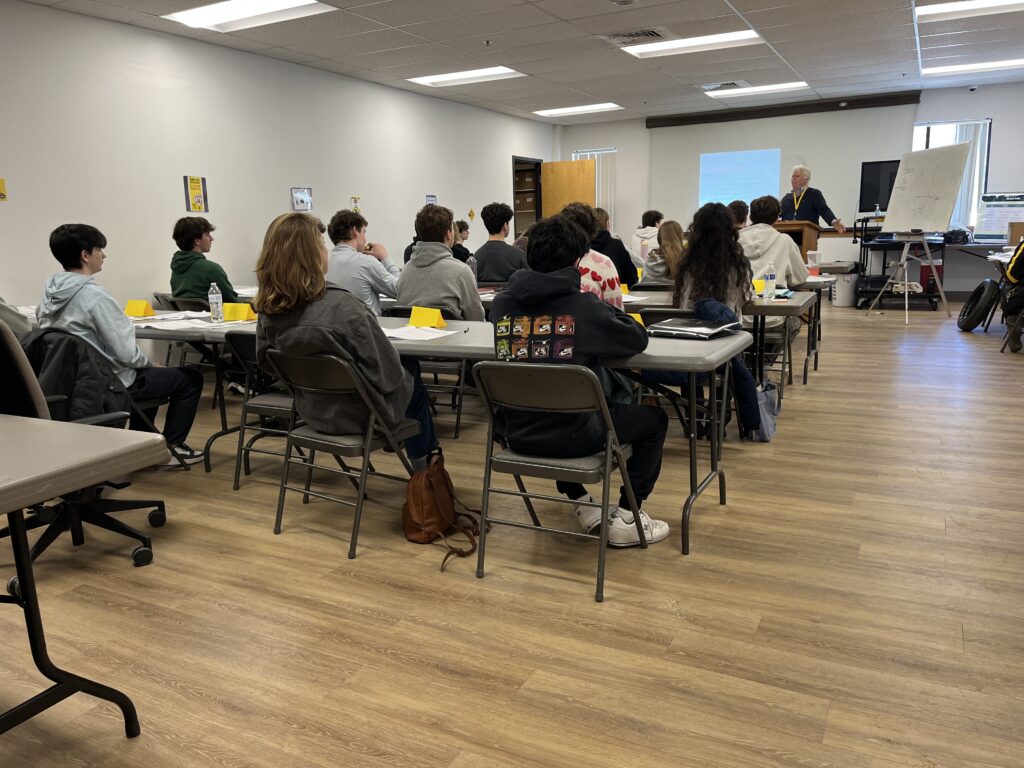
- 30 hours of classroom instruction covering Massachusetts motor vehicle law and safe driving
- 12 hours of professional behind-the-wheel instruction in a training vehicle
- 6 hours of in-car observation while another student takes behind-the-wheel instruction
- A parent or guardian must complete a 2-hour parent class, unless they completed one within the past five years
Applicants 18 and over are not required by law to complete a driver’s education program, though professional instruction is strongly recommended before the road test. For a detailed breakdown of all program requirements, see the CMSC guide to Massachusetts Driver’s Ed Requirements: The Complete 30/12/6 Hour Guide.
Step 4: Log Your Supervised Practice Hours
All applicants under 18 must complete at least 40 hours of supervised, behind-the-wheel driving, certified by a parent or guardian, in addition to the 12 hours of professional instruction. The Massachusetts RMV will accept 30 hours of parent-supervised driving if the applicant also completes a driver skills development program. The permit must be held for at least 6 consecutive incident-free months before the road test. Any suspension resets that 6-month clock.

Step 5: Pass the Massachusetts Class D Road Test
To schedule the road test, you provide your name, date of birth, Social Security number, and learner’s permit number through the myRMV portal. Road test and license fees ($35) can be paid online before or after the test.
For a Class D road test, you must bring:
- Your physical learner’s permit (the official paper permit, legible and undamaged)
- A completed Class D Road Test Application (printed, not electronic)
- A qualified sponsor: a licensed driver over the age of 21 with at least one year of driving experience whose valid US license is presented to the examiner in physical form
- A roadworthy vehicle with valid registration, current inspection, and insurance meeting Massachusetts minimum coverage requirements
The $35 road test fee is not refunded if you fail, are unprepared, do not bring a registered vehicle, are late or do not appear, or cancel with less than 72 hours notice. For the complete day-of checklist, see the Massachusetts RMV Road Test Checklist: Your Class D and M Guide.
What Does the Class D Road Test Examiner Actually Evaluate?
According to the official Massachusetts Class D Road Test Application and Information Sheet, the examiner evaluates:
- Driving in the proper lane
- Looking carefully and signaling before changing lanes
- Driving at safe speeds in compliance with posted limits and traffic conditions
- Obeying signs, signals, and road markings throughout the route
- Vehicle control during standard maneuvers, parking, and stopping
If you have previously failed the road test, the CMSC guide to Failed Your Massachusetts Road Test covers the most common reasons for failure and how to correct them before the next attempt.
How Many Times Can You Attempt the Class D Road Test?
According to the Massachusetts RMV, you can attempt no more than 6 Class D road tests in any 12-month period. This limit is not widely known and is not mentioned on most driving school pages. If you approach the 6-attempt limit without passing, CMSC’s road test preparation service focuses your remaining attempt on the specific skills the examiner evaluates, rather than general driving practice.
How Much Does a Class D License Cost in Massachusetts?
All fees below are taken directly from the RMV Schedule of Fees, revised May 2025. All fees are non-refundable.
Note: Class D and M licenses and permits can be issued for less than 5 years depending on the duration of an applicant’s lawful presence in the United States, with the fee prorated at $10 per year in that case.
How Is a Class D License Different from a CDL or a Class M License?
Class D vs Class M (Motorcycle License)
A Class D license does not authorize you to ride a motorcycle. To legally operate a motorcycle or two- or three-wheeled vehicle in Massachusetts, you need either a standalone Class M license or a Class M endorsement added to your Class D. The endorsement costs $15. Most Massachusetts motorcycle riders obtain their Class M by completing an MSF Basic Rider Course through the Massachusetts Rider Education Program (MREP), which also waives the Class M road test for adults 18 and over. For details on that process, see the CMSC guide to the Class M Road Test Waiver in Massachusetts.
Class D vs CDL (Commercial Driver’s License)
A CDL covers vehicles that exceed the commercial weight threshold or are used to transport 16 or more passengers. A Class D license does not permit operation of any vehicle requiring a CDL-A, CDL-B, or CDL-C. Importantly, if your goal is to eventually obtain a CDL, the Massachusetts CDL Manual states that applicants must possess a valid Massachusetts Class D license before applying for a Commercial Learner’s Permit. Class D is the required starting point, not an optional step.
What Is a REAL ID and How Does It Relate to Your Class D License?
A REAL ID is a federally compliant version of your Massachusetts Class D license. Both allow you to drive legally in Massachusetts. The difference is what you can use them for beyond driving.
Since May 7, 2025, a REAL ID-compliant document (or another TSA-accepted form of ID) is required to board domestic flights and enter certain federal facilities. A Massachusetts REAL ID has a star in the top right corner. A Standard Class D license does not carry the star and cannot be used for those federal purposes.
When you apply for or renew your Class D license, you choose between the Standard version and the REAL ID-compliant version. The REAL ID requires additional documentation proving your legal name, date of birth, Social Security number, and Massachusetts residency. It costs the same as a Standard Class D license. For everything the REAL ID requires, visit the official REAL ID in Massachusetts page on mass.gov.
The Work and Family Mobility Act applies to Standard licenses only. Massachusetts residents who obtained their license under the Work and Family Mobility Act hold a Standard Class D, not a REAL ID. A passport remains an accepted alternative for domestic air travel and federal facility access for those who prefer or require it.
How CMSC Helps You Get Your Massachusetts Class D License
Every stage of the Class D licensing process involves a decision that affects how prepared you are when you reach the road test. Getting the right instruction early means the road test becomes a confirmation of skill, not a discovery of gaps.

CMSC has prepared Massachusetts drivers for the Class D road test since 1986. The school’s RMV-approved teen driver’s education program satisfies all state-mandated requirements in a single structured program: 30-hour classroom, 12-hour behind-the-wheel, 6-hour observation, and the mandatory parent class. CMSC also handles road test scheduling coordination for program graduates, removing the administrative burden of navigating the RMV appointment system independently.
Adult drivers 18 and over who want structured preparation before their Class D road test without the full teen driver’s education program access professional behind-the-wheel instruction through CMSC’s adult lessons. Both programs operate from campuses across Worcester County, MetroWest, the South Shore, and Cape Cod.
For teens starting the Class D process from the beginning, visit the CMSC Teen Driver’s Education page. Adult applicants seeking Class D preparation can access behind-the-wheel instruction through Adult Drivers Ed at CMSC. A complete step-by-step walkthrough of how to get a Massachusetts driver’s license is available in the CMSC guide to How to Get a Driver’s License in Massachusetts.
What CMSC Students Say About Getting Their Massachusetts Class D License
CMSC holds a 4.9-star rating across 3,379 verified Google reviews. These are verified reviews from students who trained with CMSC on the road to their Massachusetts Class D license.
“George was patient, honest, encouraging and gave my son the confidence he needed to pass his test. His ability to teach, critique, coach and provide feedback in a way that built my son’s confidence rather than diminishing it made all the difference in the world.”
“I had David Luong. Great instructor. I felt very comfortable and confident behind the wheel next to him. He was very good at teaching me some of the difficult manoeuvres. Definitely would recommend for other students.”
“CMSC, great teachers and friendly staff. My teacher takes so much pride and care in her job and in her students’ success. She was great at accommodating students and helping clarify things in different ways to make students understand.”
Conclusion
A Class D license in Massachusetts is the standard authorization to drive a passenger vehicle, van, or small truck on public roads. It is the most common license the Massachusetts RMV issues and the starting point for the majority of Massachusetts drivers, whether they are 16-year-old teens working through the Junior Operator License pathway, adults over 18 taking the direct route, new Massachusetts residents transferring from another state, or international students who now qualify under the Work and Family Mobility Act. Class D is also the required foundation before obtaining a CDL. Understanding what it covers, what it costs, and what the road test involves removes uncertainty from every stage of the process. CMSC has supported that process for Massachusetts drivers since 1986. The resources above, the guides linked throughout, and the CMSC program pages connect every step to the practical preparation that makes the difference on road test day.


